
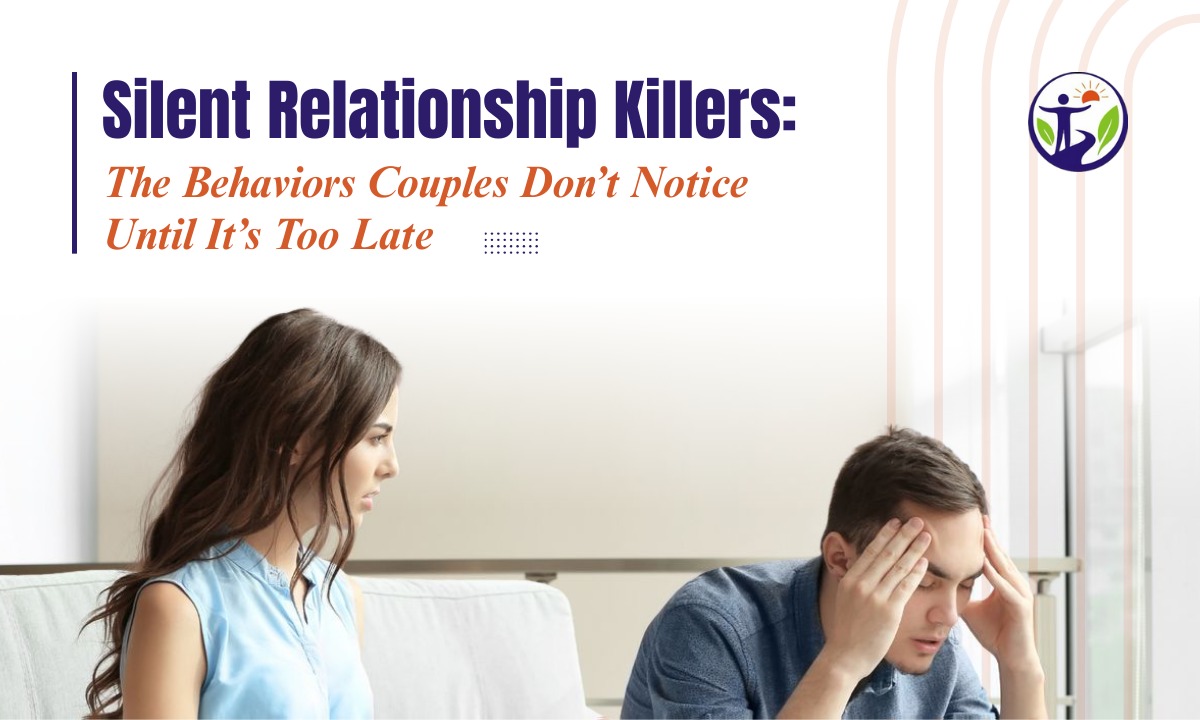
Most relationships don’t fall apart suddenly.
They fade quietly, slowly, subtly — long before either partner realizes something is wrong.
It’s not always the big betrayals or dramatic fights that end a relationship. More often, it’s the silent habits, the unnoticed patterns, and the emotional distance that grows inch by inch.
These silent relationship killers work in the background, disguised as “normal,” “not a big deal,” or “we’ll talk later.” But left unaddressed, they create resentment, mistrust, and emotional disconnection — until one day, the bond feels too weak to repair.
This blog reveals these hidden behaviors so you can recognize them early and protect the relationship you value.
1. Emotional Neglect Without Realizing It
You don’t need to yell or fight to hurt your partner.
Sometimes, the quietest pain comes from feeling unseen.
Emotional neglect happens when partners stop checking in on each other’s feelings, stop asking meaningful questions, or stop offering comfort when the other is hurting. The relationship becomes functional, not emotional — like roommates instead of lovers.
It often begins innocently: busy schedules, tired evenings, too much work, digital distractions. Over time, the emotional space between partners expands. One or both start feeling lonely inside the relationship — a dangerous warning sign.
2. The Slow Disappearance of Appreciation
Appreciation is the oxygen of love.
When couples stop saying “thank you,” “I notice what you do,” or “I value you,” the relationship starts to suffocate.
At the beginning, appreciation flows naturally. But with time, people start taking each other for granted. What used to feel special becomes expected. Efforts go unnoticed. Small acts of care stop being acknowledged.
When appreciation disappears, resentment quietly grows in its place. Partners begin to feel invisible, unimportant, and unloved.
3. Avoiding Difficult Conversations
One of the most common silent killers is avoidance.
Avoiding uncomfortable conversations feels easier in the moment — no conflict, no tension. But every avoided conversation becomes an emotional brick in the wall between partners.
Unspoken feelings don’t disappear; they accumulate.
A small frustration becomes bitterness.
A minor hurt becomes a deep wound.
A simple misunderstanding becomes a story your mind creates.
Over time, couples stop talking not because they have nothing to say, but because they fear where the conversation will lead. Silence becomes the biggest threat of all.
4. Micro-Disrespect That Feels Too Minor to Mention
Rolling eyes.
Sarcastic comments.
Interrupting.
Mocking in the name of “jokes.”
Dismissing opinions.
These small acts of disrespect feel harmless in the moment, but they chip away at emotional safety. A relationship cannot survive where one or both partners feel belittled, unheard, or devalued.
Respect is not about grand gestures; it’s built through daily moments of kindness, patience, and listening — or destroyed through the lack of it.
5. Growing Apart Without Noticing
Life changes us — careers, family responsibilities, stress, personal goals, and emotional evolution. One of the silent killers is when couples stop growing together.
Partners start living parallel lives instead of intertwined ones.
They stop sharing dreams, interests, or meaningful time.
They become more comfortable with distance than with connection.
This doesn’t happen overnight. It’s the result of neglecting emotional intimacy, shared curiosity, and intentional bonding.
6. Digital Distraction That Replaces Real Connection
Phones, laptops, and screens slowly steal attention from partners.
Scrolling becomes easier than talking.
Entertainment becomes easier than connection.
Distraction becomes a habit.
The danger is not digital use itself — it’s when the device gets more attention than the relationship. When partners feel like they have to compete with a screen, emotional disconnect forms, even if no one says it out loud.
7. The Loss of Physical Affection
Physical affection isn’t just about intimacy; it’s about connection — a hand on the shoulder, a warm hug, a kiss on the forehead, holding hands. These small gestures act as emotional glue.
When affection fades, partners often assume everything is okay because there’s no conflict, but physical disconnection is often the first sign of emotional distancing.
Couples begin to feel more like friends or roommates, slowly losing the warmth that once made the relationship feel alive.
8. Emotional Walls Built From Past Hurts
Sometimes a partner pulls away not because they don’t care, but because they’re protecting themselves. Old wounds, unresolved trauma, or memory of past conflicts can make a person shut down emotionally.
These emotional walls are invisible but powerful.
They block affection, vulnerability, and honest communication.
They create distance even when both people love each other deeply.
Without awareness, these walls become permanent barriers that prevent intimacy from ever rebuilding.
Why Silent Killers Are So Dangerous
Because they are quiet.
Because they are subtle.
Because they feel normal — until one day, the relationship feels empty, unfamiliar, or broken.
Silent killers don’t destroy love suddenly; they starve it slowly.
Couples don’t wake up and fall out of love.
They slowly stop doing the things that created love in the first place.
Rebuilding Before It’s Too Late
The good news?
Silent killers can be reversed once they are recognized.
Awareness is the first step — seeing the patterns, naming the behaviors, acknowledging the distance. Once couples recognize what’s happening, they can rebuild through communication, appreciation, emotional support, affection, and conscious effort.
A healthy relationship isn’t one without problems —
it’s one where both partners notice the problems early and work on them together.
Final Thoughts
Relationships don’t end because love disappears.
They end because connection disappears.
And connection disappears through the quiet things — the things we overlook, avoid, or assume don’t matter.
If we learn to notice these silent patterns, we can protect our relationships long before the damage becomes irreversible.
Love grows in the small moments.
And it breaks in the small moments too.
The key is to stay awake, aware, and actively connected — before silence speaks louder than love.
