
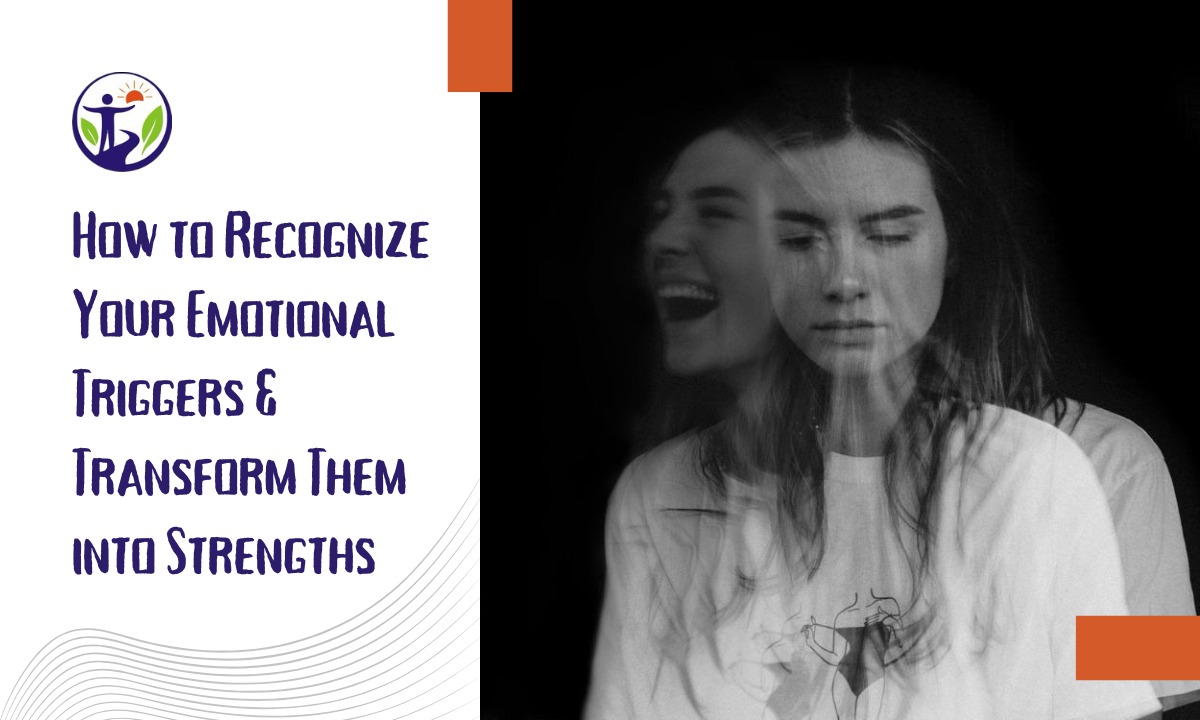
Have you ever reacted sharply to a situation and then wondered, “Why did that upset me so much?”
That intense emotional response often points to something deeper — an emotional trigger. These triggers are not signs of weakness; they are invitations to understand yourself more clearly and to grow in ways you may not have imagined.
Emotional triggers are moments, behaviors, words, or experiences that stir a strong emotional reaction within you. It could be someone interrupting you, a partner not replying to your message, a friend cancelling plans, a colleague speaking in a harsh tone, or even a memory that suddenly resurfaces. Triggers are powerful because they touch a part of us that still needs care, understanding, or healing.
At their core, emotional triggers are echoes from the past. They often come from old experiences — childhood moments where you felt unheard, past relationships where you felt abandoned, or times when you were criticized or dismissed. When something in the present resembles those past experiences, even slightly, the nervous system reacts as if the old wound is happening again.
Recognizing your emotional triggers begins with paying attention to your reactions. When you feel a sudden wave of anger, sadness, fear, or anxiety, your body is signaling that something has touched a sensitive part of your story. Your heart may race, your stomach may tighten, your thoughts may speed up, or you might immediately feel defensive or shut down. These physical and emotional signals are valuable clues pointing you toward the deeper layers of your inner world.
Often, the reaction you feel is bigger than the moment itself. A small comment may feel like an attack. A delayed message may feel like rejection. Someone’s silence may feel like abandonment. This happens because the emotional charge is rooted in history, not just the present moment.
To understand your triggers, it helps to look beneath your reactions. Ask yourself what emotion is coming up — hurt, fear, shame, disappointment, or frustration. Then reflect on where you have felt this emotion before. Patterns often repeat themselves: feeling unappreciated today may reflect years of longing for recognition; feeling excluded may come from early experiences of not belonging; feeling judged may stem from times you were criticized or compared.
Once you start connecting these patterns, emotional clarity begins to form. You start seeing that your triggers are not random — they are connected to unmet needs. Maybe you need reassurance, respect, patience, validation, or simply honest communication. Understanding these needs helps you respond consciously instead of reacting impulsively.
The transformation begins the moment you stop fighting your triggers and start listening to them. Every trigger has something to teach you. Feeling criticized may guide you toward building stronger self-worth. Feeling ignored may encourage you to express your needs more clearly. Feeling controlled may remind you to set healthy boundaries. Feeling abandoned may lead you to strengthen your emotional independence and self-connection.
Emotional triggers can also become sources of strength when you learn to bring compassion to yourself. Instead of judging your reactions, you learn to soothe yourself: “It’s okay to feel this. I’m safe. I don’t need to respond immediately.” This softens the emotional spike and helps your nervous system settle. Over time, this practice builds emotional resilience.
Communicating your inner reality also transforms triggers into tools for healthy relationships. When you can say, “When this happens, I feel hurt,” or “I feel overwhelmed and need a moment,” you create deeper understanding and emotional safety with others. Vulnerability strengthens connection.
The more you understand your emotional landscape, the more empowered you become. What once felt like an uncontrollable reaction begins to feel like a clear signal — a chance to choose differently, respond wisely, and grow stronger.
Your emotional triggers are not your enemy. They are invitations to understand the parts of you that are longing for healing. And when you honor those parts, something beautiful happens: the same triggers that once held you back become stepping stones toward emotional clarity, healthier relationships, and a stronger, more grounded version of yourself.
You don’t have to fear your triggers. You can transform them. And in that transformation, you reclaim your power.
