
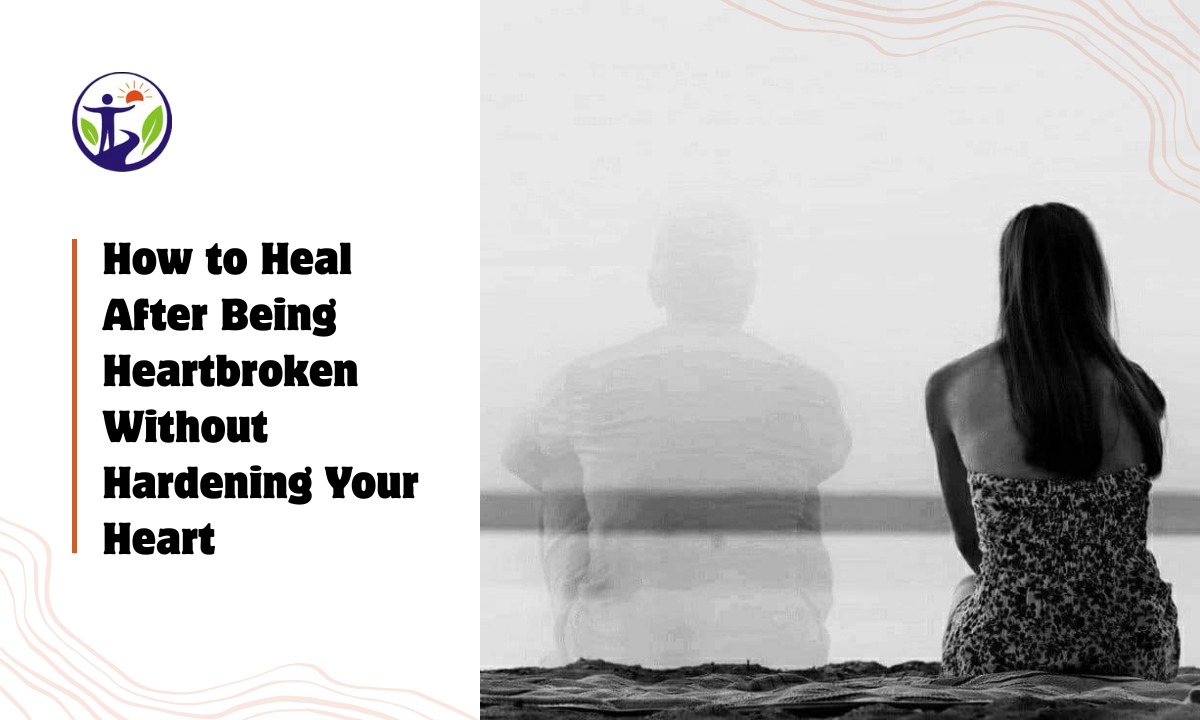
Heartbreak changes you.
Not just the way you love, but the way you see yourself, the world, and every relationship after it. When someone breaks your heart — whether through betrayal, abandonment, distance, or simply no longer choosing you — it leaves a wound that feels both emotional and physical. You carry it in your chest, in your breath, in your thoughts, in your sleep, and in the quiet moments when everything feels too heavy.
For many people, the instinct after heartbreak is to protect themselves. To pull back. To build walls. To close off the parts of their heart that once loved freely. It feels safer to harden than to be hurt again. But the truth is, when you harden your heart to pain, you also harden it to love, joy, tenderness, and connection.
Healing without closing your heart is possible — and it is one of the most profound journeys you’ll ever take.
Heartbreak Breaks You Open Before It Puts You Back Together
Pain reveals things about you that peace never could.
It shows you your depth, your capacity to feel, your longing for connection, your courage to love even when it carried risk.
Heartbreak forces you to face emotions you might have avoided: grief, abandonment, anger, disappointment, loneliness, unworthiness. These uncomfortable emotions are not signs of weakness — they are signs that you loved deeply. They are proof that your heart was alive.
Letting yourself feel the pain, without rushing to numb it or escape it, is part of staying open. It’s how you prevent your heart from becoming rigid or resentful.
You Don’t Have to Pretend You’re Fine
One of the most damaging things people do after heartbreak is pretend they’re okay.
“I’m over it.”
“It doesn’t matter.”
“I don’t care anymore.”
But the heart knows when you’re lying to it.
Suppressing your emotions doesn’t make you stronger — it only buries your wounds deeper, where they quietly shape your future relationships. Honesty with yourself is a form of softness. It keeps your heart open. It keeps you connected to your humanity.
Grief is not a setback.
It’s a bridge — from who you were to who you are becoming.
Your Heart Doesn’t Break Just for the Person — It Breaks for the Dreams
When a relationship ends, you aren’t only grieving the person.
You’re grieving:
- The life you imagined with them
- The future you created in your mind
- The version of yourself you were with them
- The emotional home you thought you had
- The safety you believed existed
- The habits, conversations, and rituals you shared
- The comfort of having someone to turn to
That’s why heartbreak feels so deep — it tears away not just a person, but a whole imagined world.
Understanding this helps you stay soft because you realize your grief is not foolish; it’s human.
Healing Without Hardening Means Learning Without Closing
You don’t have to shut down to protect yourself.
You don’t need to become colder to avoid pain.
You don’t need to stop believing in love just because someone couldn’t love you the way you deserved.
Staying open doesn’t mean ignoring what happened — it means integrating the lessons without turning them into armor.
It means learning:
- what your boundaries need to be
- what red flags you ignored
- what parts of you need more care
- what patterns you want to break
- what kind of love you want to welcome next
Learning is not closing.
Learning is evolving.
Your Softness Is Not Your Enemy
People often think their softness got them hurt.
The truth is, your softness allowed you to experience love fully. It allowed you to connect, to trust, to feel alive. Heartbreak hurts not because you were weak — but because you were brave.
You loved with sincerity, and that is never a mistake.
Hardening your heart deprives you of one of your greatest gifts: your capacity to love deeply.
The goal isn’t to become harder — it’s to become wiser, stronger, and more self-connected, without losing the tenderness that makes you human.
Forgiveness Doesn’t Free Them — It Frees You
Holding onto anger or resentment feels like protection, but it’s actually a cage.
Forgiveness doesn’t mean what they did was okay. It doesn’t mean you want them back. It doesn’t mean you ignore the pain.
It means you’re choosing not to let the past shape your future.
You’re choosing to release the emotional grip the experience has on your heart.
Forgiveness is softness with boundaries. It’s a way of saying:
“I will not let this harden me. I deserve peace.”
Letting Go Doesn’t Mean You Didn’t Love
Letting go is one of the most misunderstood parts of healing.
Many people hold on because letting go feels like losing the connection permanently — like admitting the love was wasted.
But love is never wasted.
Every relationship teaches you something about who you are and what you deserve. Every heartbreak shapes you in ways you don’t see immediately. Letting go doesn’t erase the love — it simply creates space for new love to grow.
And letting go without closing off your heart is one of the strongest things you can ever do.
You Can Protect Yourself Without Becoming Closed
You can have boundaries without having walls.
You can be cautious without being cold.
You can be discerning without being distant.
You can heal without turning bitter.
The key is to stay connected to your emotional truth — to feel, to reflect, to learn, and to stay open to the possibility that love will find you again in a healthier, more aligned way.
Heartbreak teaches you to love with more wisdom next time, not less heart.
Your Heart Will Open Again — Not Because You Forget, But Because You Grow
With time, your heart expands in ways you couldn’t imagine during the pain.
You learn what wounds need healing.
You discover what self-love really looks like.
You understand the kind of partner who truly aligns with your soul.
You become more grounded, more compassionate, and more aware.
And when love comes again — and it will — you’ll be able to receive it without fear, without walls, without the heaviness of the past.
Your heart doesn’t stay open because it never broke.
It stays open because you chose to grow instead of harden.
